



I have received many emails and calls from constituents who had seen social media posts or heard a podcast from political reporter Brandi Kruse explaining how she had been denied a press pass by the House of Representatives in Olympia.
To be clear, she was not denied a press pass by the Senate, nor is she the only reporter to be discriminated against by the House. Two others whose names may be familiar to you — Ari Hoffman and Jonathan Choe – were banned, as well. Because this situation has generated strong reactions, I want you to know my position on it.
Read the letter from the House of Representatives denying Brandi Kruse a press pass.
A free and independent press is essential to a healthy democracy. Freedom of speech and freedom of the press are foundational principles, and they apply regardless of whether a journalist works for a large legacy outlet or operates independently. As traditional media has declined, independent journalists and new media voices have stepped in to inform the public, ask hard questions, and hold government accountable. That work should matter to everyone.
While the House of Representatives and the Senate are separate bodies with separate rules and procedures, we want to be clear about the Senate’s approach. The Washington State Senate has not denied press credentials to any journalist based on viewpoint or political perspective.
The Senate relies on journalists to self-attest to their status, and we do not impose ideological tests for access. I have also formally given my approval for credentialed members of the press to have access to the hallway (known as the “wings”) adjacent to the Republican side of the Senate chamber, consistent with Senate rules.
Reasonable people can disagree on policy and politics but restricting a reporter’s access to lawmakers based on perceptions about his or her personal views sets a concerning precedent. Transparency, open debate, and a diversity of voices strengthen public trust in government rather than weaken it.
Your feedback is important, and concerns like yours help reinforce why these principles deserve continued attention and defense.
If you have questions or comments, please email me at john.braun@leg.wa.gov.
Sincerely,
John Braun
Bill status: Protecting kids from fentanyl
Senate Bill 5071, my bill to add fentanyl and other synthetic opioids to the child endangerment law, was passed by the Senate more than two weeks ago. Yet for the fourth year in a row, this legislation is stuck in committee in the House of Representatives, waiting for a hearing.
This time around, an amendment was added to the bill that would allow parental support and other services as consequences for a first offense instead of prison. The sentences for subsequent offenses would be up to the courts to decide.
I sincerely hope that, with this amendment, the Democrat chair of the House Committee on Community Safety finally gives this bill a hearing and moves it out of committee so the full House can vote on it.
If it becomes law, this legislation will not criminalize addiction. Substance-use disorder is a disease that traps people in a vicious downward spiral, but it doesn’t absolve them from the consequences of endangering their child by exposing them to drugs that can kill them.
With the increase in the use of fentanyl, especially given how lethal it and other synthetic opioids are, it is important to update the law by adding them to the list of drugs (such as methamphetamine) in the Child Endangerment Act.
You can contact the chair of the committee to ask him to hold a hearing on the bill – and move it forward.
My bills the Democrat majority will not advance
JUVENILE JUSTICE
Senate Bill 5278: My bill to alleviate crowding at juvenile-justice facilities such as Green Hill School in Chehalis and Echo Glen Childrens Center outside Snoqualmie passed the Senate last year but died in the House because a Democrat senator asked House Democrats to kill it — even though she voted for it. I reintroduced the bill this year and majority Democrats in the Senate ignored it completely. The continued rejection of this legislation means dangerous overcrowding will continue at these facilities.
EXPANDING NUCLEAR ENERGY
Senate Bill 5821: This bill would have added advanced nuclear energy to the State Energy Strategy released in 2021. It also would have required the Department of Commerce to supplement the strategy with a “nuclear power strategic” framework. If our electrical grid is going to meet the demands of the future, especially given the increasing power needs of artificial intelligence, we have to expand access to nuclear strategy. The Senate’s energy committee held a hearing but let the bill die.
RESTORING FUNDING FOR CANCER RESEARCH
Senate Bill 6116: Last year, a tax bill targeting synthetic nicotine products (an example is Zyn) swept up a tax on vapor products that provided $45 million for cancer research during the two years prior. My bill would have restored the funding mechanism to the way it was before the passage of SB 5814, ensuring that funding goes to fighting cancer. This bill had a hearing in the Ways and Means committee in January but has yet to move forward.
ELIMINATING THE WAIT LIST FOR SERVICES FOR DEVELOPMENTALLY DISABLED INDIVIDUALS
Senate Bill 6163: This bill would require the expense of services for developmentally disabled individuals and their families to be included in future “maintenance level” budgets automatically. It would prevent a repeat of Governor Ferguson’s decision not to include these services in his maintenance budget, resulting in nearly 500 families who are eligible for services to be waitlisted due to a lack of funding. This is completely unacceptable. SB 6163 received a hearing in Ways and Means but no vote yet. Read more about my stance on this issue.
HOUSING GRANT FRAUD
Senate Bill 6205: Although my bill to prevent people from defrauding a publicly funded program to provide grants for homeownership received a hearing in the Senate Committee on Housing in January, the committee chair did not allow it to move out of committee before the Feb. 4 deadline for action on Senate policy bills. I fear this will allow people with insider connections to the nonprofits in charge of dispensing the program’s money to continue receiving grants that should go to others in need.
MAINTAINING FISH STOCK DESPITE HATCHERY CLOSURES
Senate Bill 6207: Despite the ongoing struggle to increase the population of steelhead trout in Washington waters, the Department of Fish and Wildlife is closing the Skamania Hatchery in Washougal. I believe the department needs to be held accountable for maintaining production of steelhead juveniles. This bipartisan bill would have required DFW to maintain production of certain fish stock even if it closes a hatchery, meaning the agency would need to increase production somewhere else.
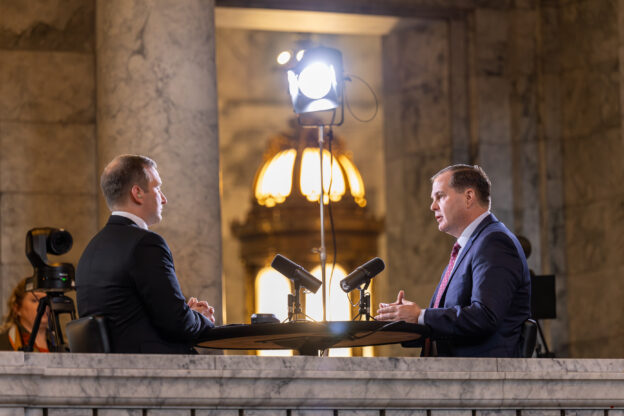
Watch my weekly video update

Washington voters have rejected a state income tax 10 times — 11 if you include an advisory vote that also rejected the idea. But Democrats aren’t listening. They have proposed Senate Bill 6346, which is a statewide income tax that — at $4 billion per year — would dwarf all other tax increases.
Not only are Democrats rushing the bill through the Legislative process, they are only granting one hour for public comment and have included a clause in the bill that prevents voters from overturning it in referendum.
Sen. Chris Gildon, R-Puyallup, and I sent a letter to the Democrat chair of the Senate’s fiscal committee asking that the public comment time be expanded to at least two hours. She refused our request.
In addition to the income tax, other big news this week is that the listening sessions conducted by the Senate and House Republicans on the two initiatives to the Legislature were a big success. Thank you to everyone who came to Olympia to share your stories.