




Tag Archives: income tax

NEWSLETTER: Is Washington getting a state income tax?

Let’s cut to the chase: Is Washington getting an income tax? If Democrats and the governor get their way, the answer is yes.

Governor Bob Ferguson announced this week that he supports a state income tax, so long as it only applies to people earning more than $1 million a year. Make no mistake—this would be the first step toward a broader income tax that would eventually affect most, if not all, Washingtonians.

The governor also acknowledged that even if Democrats pass an income tax this year, the state wouldn’t see any revenue until 2029. Why the delay?


BACKGROUND

Washington’s Constitution prohibits a graduated income tax— one that charges different rates based on income. Any graduated income tax passed by the Legislature would almost certainly be challenged in court. In fact, Senate Democratic leadership has openly said that’s the plan.

The goal is to have the Washington State Supreme Court reclassify income so the Constitution no longer applies. We’ve seen this strategy before.

In 2023, Democrats passed an income tax on capital gains. Even though the IRS and every other state consider capital gains to be income, Washington courts rebranded it as an “excise tax” to let it stand. That ruling is now the legal foundation Democrats are relying on to justify pushing an income tax even further.

In the meantime, the state budget would not rely on the new tax revenue until—presumably—the courts approve it.

To be clear: I oppose any attempt to impose an unconstitutional income tax in Washington. Republicans in both the House and Senate will fight this because Washingtonians have been crystal clear—they do not want a state income tax. Period.

Voters have rejected income taxes more than ten times. As recently as 2024, they passed Initiative 2111, which permanently bans personal income taxes at the state and local level.

Ironically, for years Democratic governors—including Jay Inslee and Bob Ferguson—touted Washington’s lack of an income tax as a key reason businesses should locate here. A few years ago, the Department of Commerce quietly removed that selling point from its website. That should have been a warning sign.


INCOME TAX INSTEAD OF A SALES TAX?

Some people assume Washington would become like Oregon, which has an income tax but no sales tax. That is not what Democrats are proposing.

Nowhere have they promised to eliminate the sales tax. Under their plan, Washington would have both a sales tax and an income tax. In fact, the admission that the income tax would see no revenue for several years is a guarantee that the sales tax will continue, as is.


A SPENDING PROBLEM

Days before the governor’s announcement, he released his supplemental budget and vowed to veto sales or property tax increases. Notably absent from his list? An income tax.

Why won’t Democrats get the message? Washington doesn’t have a revenue problem—it has a spending problem. Even mainstream media is beginning to realize this.

The state operating budget is $77 billion, having ballooned dramatically over the past decade. Yet despite record spending, have we reduced homelessness? Fixed our housing shortage? Recovered from learning loss in our schools? Addressed the mental health and substance abuse crisis?

The answer is no.

Washington can’t afford to continue down the Democrats’ tax-and-spend path. Their ideology-driven budgeting has created a multibillion-dollar shortfall. The solution isn’t digging deeper into your pockets—it’s reprioritizing how your tax dollars are spent.


WHAT CAN YOU DO?

You can speak out against this income tax—and any others—by contacting the bill sponsors, budget committee chairs, legislative leaders, and the governor’s office. Tell them to stop pushing unconstitutional taxes and start living within our means.

When these bills receive hearings, you can sign in to oppose them and even testify—either in person or remotely.

Learn how to testify in committee.

Your voice matters.

I will keep you updated as this fight continues.

Sincerely, Senator John Braun


Washington does not have the most regressive tax structure in the nation

Democrats — and much of the press — routinely say Washington has the “most regressive” or “upside-down” tax system in the country. That claim comes almost entirely from one partisan advocacy study that’s been repeated so often it’s treated as fact.


WHAT THE NEUTRAL ANALYSIS FOUND

A new economics paper by professors from Princeton, the University of Minnesota, and economists at the Federal Reserve, published by the National Bureau of Economic Research (NBER), reached a very different conclusion.

Instead of ranking Washington as worst-in-the-nation, the NBER study found that Washington’s overall tax-and-spending system is essentially middle-of-the-pack — about 23rd nationally.

That’s a dramatic difference.


WHY ARE THE RESULTS SO DIFFERENT?

There are two big reasons the NBER findings don’t match the oft-cited partisan study:


  1. The partisan study mostly just ranks income-tax rates

The study Democrats cite heavily weights whether a state has a high top income-tax rate. In fact, the NBER authors point out that the partisan ranking closely tracks which states have the highest income-tax rates, not which states are actually most “unfair” overall.

Washington doesn’t have an income tax — so that study effectively penalizes us from the start.

By contrast, the NBER research:

  • Looks at all income levels, not just the very top
  • Measures what people actually pay, across the full income range
  • Finds Washington’s effective tax rates for most working and middle-class residents are very close to the national average

In other words: when you look at the whole income ladder, Washington doesn’t stand out as extreme.


  1. The NBER study includes benefits — not just taxes

This is the most important difference.

The partisan study looks only at taxes paid. The NBER study looks at taxes paid and benefits received.

This means it accounts for:

  • Public assistance
  • Social services
  • State spending that directly benefits lower- and middle-income households

When you include those benefits, Washington turns out to be one of the more generous states in the country — and those benefits significantly offset any tax regressivity.

Very few states provide more in transfers and services than Washington.


THE BOTTOM LINE

When you look at the full picture — taxes and benefits — Washington:

  • Is not the most regressive state
  • Is not an extreme outlier
  • Lands squarely in the middle nationally

The claim that Washington has the “worst” tax system depends on ignoring half the equation.


ONE MORE FINDING THAT RAISES EYEBROWS

The NBER paper also found something Democrats rarely mention:

  • People at all income levels tend to move away from states with more progressive tax systems
  • This effect is strongest among high earners
  • States that rely heavily on income taxes tend to have higher overall tax burdens
  • States with sales and property taxes tend to have lower average tax rates


IN SHORT

Highly progressive tax systems may sound good in theory — but in practice, they often drive people (and jobs) elsewhere. A single tax alone might not motivate people to move, but every new tax may be the last straw that does.


UPDATE: The Green Hill School


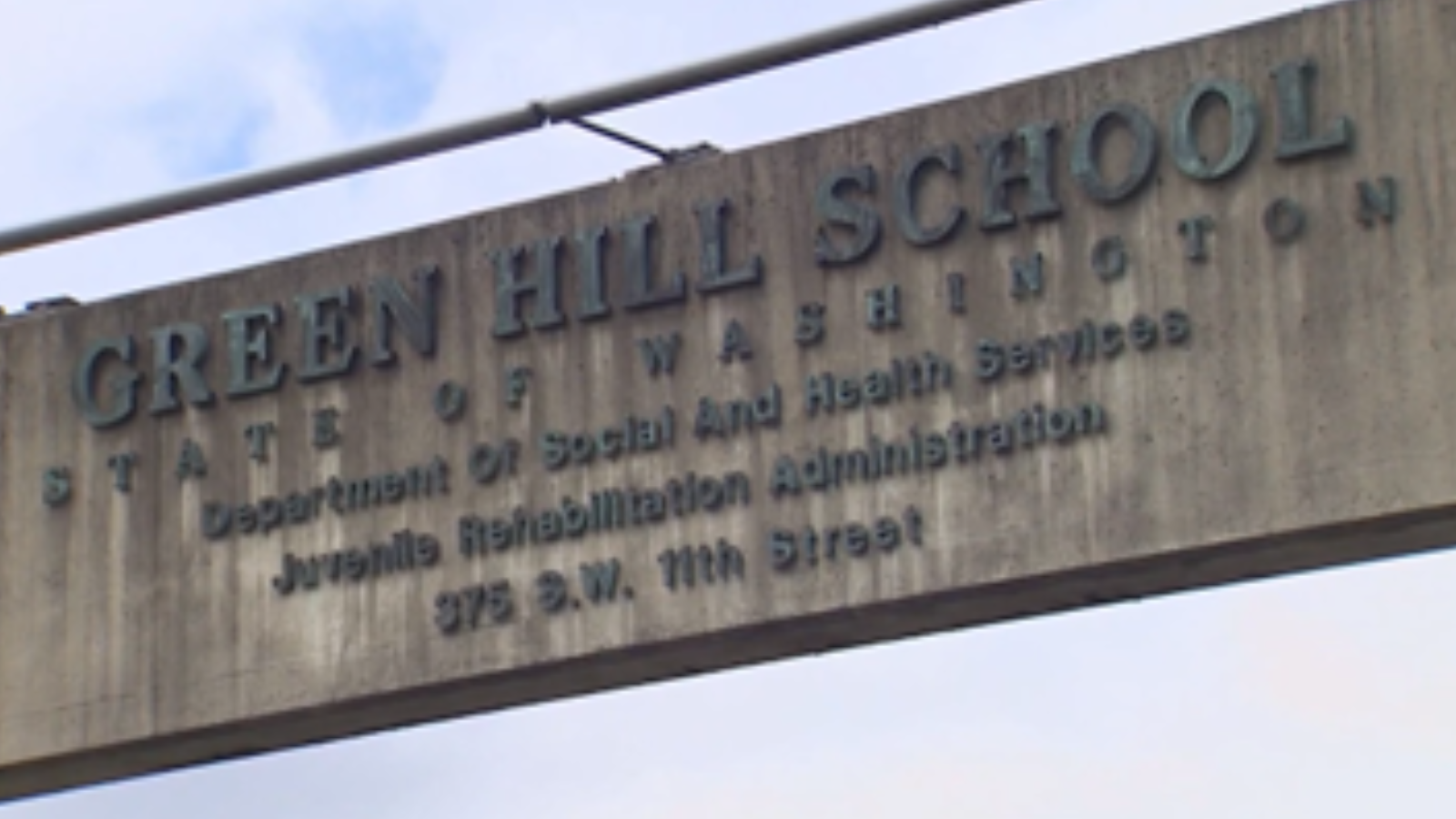
Gov. Ferguson’s 2026 budget proposal includes nearly $12 million for Washington’s two most significant juvenile rehabilitation facilities — the Green Hill School and Echo Glen.

Both have been plagued by dangerous overcrowding resulting from a policy known as “JR to 25,” which allows those convicted of felonies before the age of 18 to remain at the facilities with youth offenders until age 25, when they are transferred to adult prisons.

For years, I’ve called for thorough investigations into violence among the residents, assaults against staff, poor security, and illegal activity among staff. Last year, my bill to allow the transfer of some of the adults before the age of 25 to the custody of the Department of Corrections passed the Senate but was killed in the House. If it had passed, it would have helped to alleviate the overcrowding soon after taking effect.

I also sponsored a bill last year that a bill that would require staff at these facilities to wear body cameras as a means to improve transparency, accountability and safety for everyone. Unfortunately, the Democrats never gave it a hearing.

The governor would spend the $12 million on higher salaries for current staff and additional security. While I support a variety of efforts to fix this ongoing problem, any money spent should be part of a larger effort to drastically and immediately improve conditions.

Legislative Democrats should stop playing games with the lives of the residents and staff at our juvenile rehabilitation centers and pass my reforms in 2026.


NOW RECRUITING: Senate Pages for the 2026 Legislative Session


Do you know a young person (age 14 to 16) who would like to be sponsored by my office to page for the Legislature this year?

Read more about the program:

“The Washington State Legislature has one of the finest page programs in the country. Each year, hundreds of students from across Washington have the opportunity to take part in the legislative process and watch the Legislature and other branches of state government in action.

Pages are sponsored by legislators and serve for one week during the legislative session. Pages spend their week learning about the legislative process while distributing materials throughout the capitol campus, assisting offices, delivering messages, working on the chamber floor, and carrying the flags at the opening of each day’s legislative session. Pages also spend time each day in Page School learning about all aspects of state government.”

To speak with Senate Page Program staff about accommodations​ or how the Senate can help facilitate a positive paging experience, please contact:  

Myra Hernandez
Civic Education Director
P.O. Box 40482
Olympia, WA 98504-0482
(360) 786-7498

Are you broke yet? Democrats ready to pass even more taxes in 2026

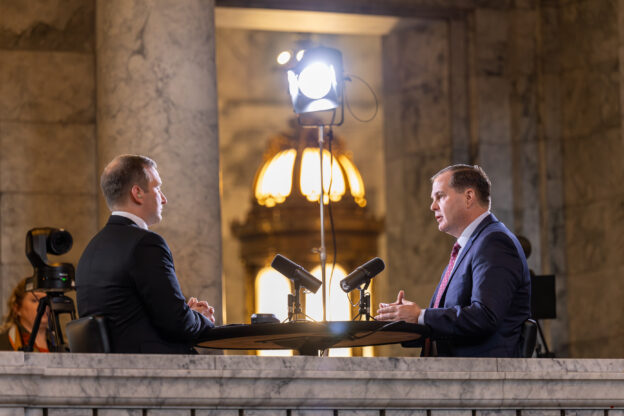
LISTEN: Jobs Tax. Income Tax. Innovation Tax. Sen. John Braun Says: Enough to Democrat Tax Hikes

Dear Friends and Neighbors,

Affordability remains the number one concern for families across Washington, yet the policies championed by Democrats in Olympia continue to push our state further out of step with the rest of the country. Instead of easing pressures, their decisions are making Washington one of the least affordable places to live, work, and run a business.

Gas prices are falling nationwide, but Washington still ranks among the top three most expensive states in the country. Our restaurants face the highest operating costs in America while earning the lowest profit margins. Schools, nonprofits, and small businesses are still suffering from last year’s expansion of the sales tax.

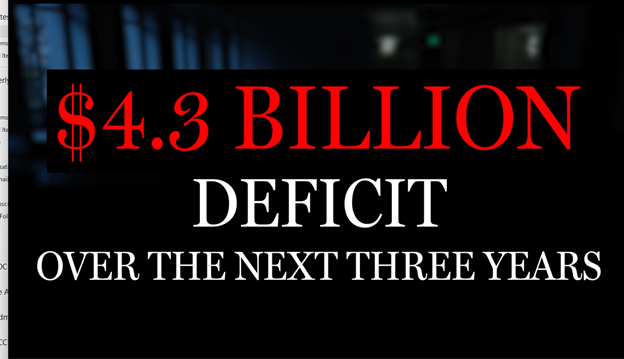
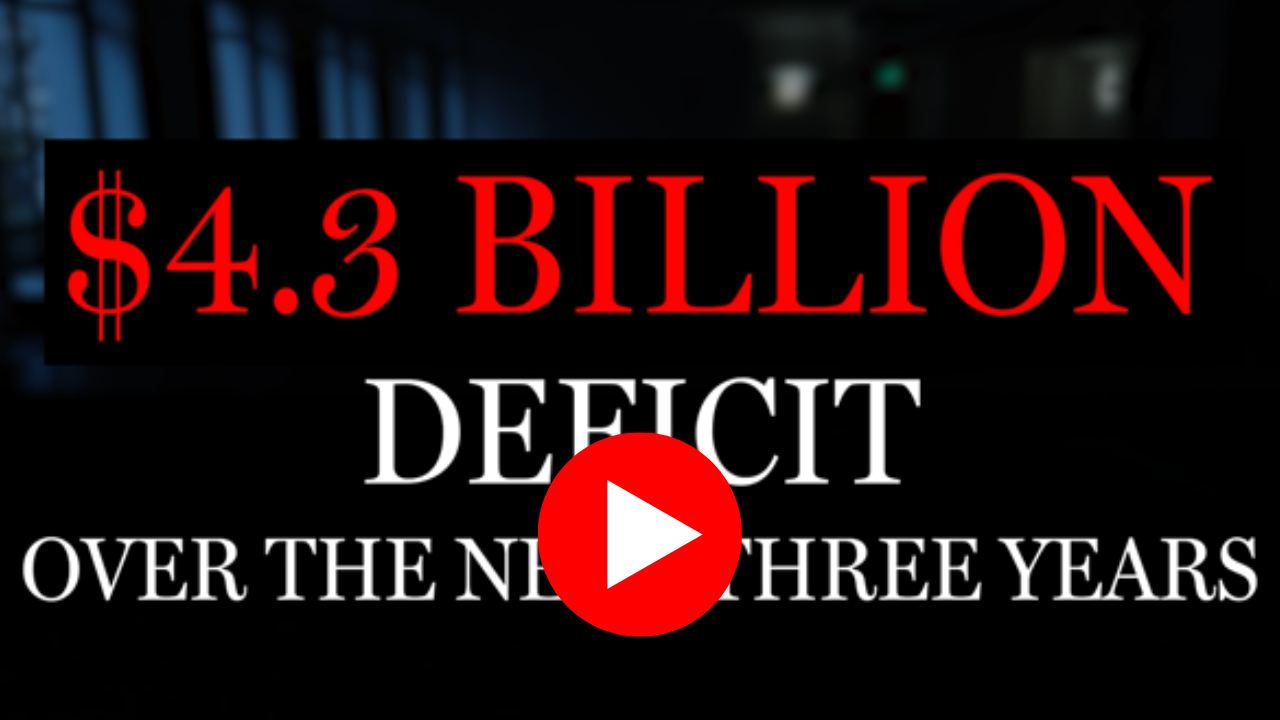
As we approach the 2026 legislative session, people have every reason to be concerned. We are currently facing a $4 billion budget shortfall, but so far, we are hearing about proposals in the neighborhood of $11 billion in new or higher taxes.

Democratic leaders have already announced plans for a new tax on jobs—one that threatens our economy—and they have openly stated their intent to pass a state income tax this year.

When they tell you they plan to do this, believe them.


The reality about a state income tax

Washington’s constitution prohibits a graduated income tax. Any tax that applies only to individuals earning above a certain amount—while exempting everyone else—is unconstitutional. Despite this, Democrats appear determined to push one through anyway and send it to the state Supreme Court, hoping the court will reclassify it as an “excise tax.”

If that happens, the door opens for the very tax Washington voters have rejected 11 times at the ballot box.

Some voters mistakenly believe that adopting an income tax would mean eliminating our sales tax. That is not on the table. There is no proposal—none—to model our system after Oregon’s, which has an income tax but no sales tax.

Meanwhile, several of our largest employers have already stated publicly that they will leave Washington if an income tax is enacted. For decades, our Democratic governors touted the lack of an income tax as a key incentive for companies to locate here. Now, the majority party is prepared to give those same employers every reason to leave.

We have a fight ahead

Republicans will fight to protect you, your paycheck, and your job from any attempt to impose an income tax in Washington. But we cannot do it alone.

You can make a difference by contacting Democratic legislators and telling them to reject this tax. You can testify when the bill receives a hearing. And you can encourage your friends, neighbors, and family members to get involved as well.

I will keep you updated as this and other harmful proposals move through the Legislature. Your participation matters. Your voice matters.

Together, we can make sure our voices are heard.

Sincerely,

Senator John Braun


Can Washington afford it?


Before passing another law, we should ask one question: Can Washington afford it – not just in dollars, but
in safety, trust and opportunity?

Families across Washington are struggling to pay bills, find affordable housing, and feel safe in their
communities. Polls show “affordability” is the people’s top priority. Every decision in Olympia has a cost,
and it’s time we make affordability the test for every policy – financial, moral and generational.

As the minority, our job is to hold the majority accountable for the cost of their leadership and to offer
common-sense solutions Washington CAN afford.
This session we will connect every issue – from taxes to education to public safety – back to this simple,
people-centered truth:

Washington can’t afford policies that make life harder for the families we represent.


Myth vs fact:

MYTH: So much was cut from the budget last year that there isn’t anything left to cut.

FACT: The budget actually GREW by 8.2% last year. Democrats didn’t make cuts – they changed their funding priorities and programs such as one caring for drug-addicted babies were defunded.

MYTH: Last year’s deficit was $16 billion to $20 billion.

FACT: According to NONPARTISAN staff, the true deficit was $7.3 billion. Democrats made a policy choice to fund $4 billion in pay raises for state employees. They did NOT need to pass the largest tax increase in state history.

MYTH: We need more “revenue,” including an income tax.

FACT: The Democratic majority doesn’t have a revenue problem. It has a spending problem. Democrats need to reevaluate their priorities. Also, a graduated income tax, which taxes people at different rates based on their income, is unconstitutional in Washington and voters have rejected a state income tax 11 times. This hasn’t deterred Democrats from pushing for one and lobbying the state Supreme Court to consider it an excise tax instead.

By the numbers:

  • The fastest growing part of the budget is lawsuit settlements worth billions of taxpayer dollars paid to victims and their families for Democratic mismanagement of state agencies and their policies that result in the injury and death of the most vulnerable.
  • Washington remains dead last nationwide for the number of law enforcement officers per capita, despite the hiring of more than 300 new officers.
  • Washington is one of the three most expensive states for gas prices due to $0.52/gal in Democratic carbon taxes
  • The average household income in Washington is roughly half what is required to qualify for the median-priced home.
  • Washington’s restaurants have to charge the highest prices in the nation, but have the lowest profit margins in the nation (1.5% compared to the 4% national average).
  • Washington is rated 35th nationwide for business climate, down from 15th in 2022. The drop is due to the income tax on capital gains.
  • Washington ranks as the 7th least affordable state for infant care, with care for one infant costing 17.8% of a family’s yearly income.
  • Democratic policies will force an 18.6% electric rate hike over the next two years for many Western Washington consumers.
  • Washington could see blackouts across the state due to Democrats’ policies that will remove 1292 megawatts of electricity from the grid in 2026.


Keep Washington Livable

  • Reject policies that make life more expensive
  • Advance solutions that reduce costs and reward hard work and innovation
  • Protect jobs and keep job providers in Washington

Washington can’t afford higher taxes and fewer economic opportunities.


Keep Washington Safe

  • Prioritize victims over offenders
  • Expand and strengthen law enforcement
  • Protect kids from overdoses, abuse and exploitation

Washington can’t afford policies that put our communities in danger.


Keep Washington’s Promise

  • Improve public school academic attendance and performance
  • Support stronger, healthier families
  • Reinvest in foster care and childcare programs

Washington can’t afford to neglect its responsibility to our kids and to their future prosperity.


Local flooding and a state of emergency

The 20th Legislative District has been impacted by heavy rains this week, resulting in localized flooding and landslides. Randall is completely cut off and Highway 12 remains closed, officials do not know when roads will reopen.

The governor has declared a state of emergency, which includes the activation of 300 National Guardsmen to assist with response (pending approval from the federal government.)

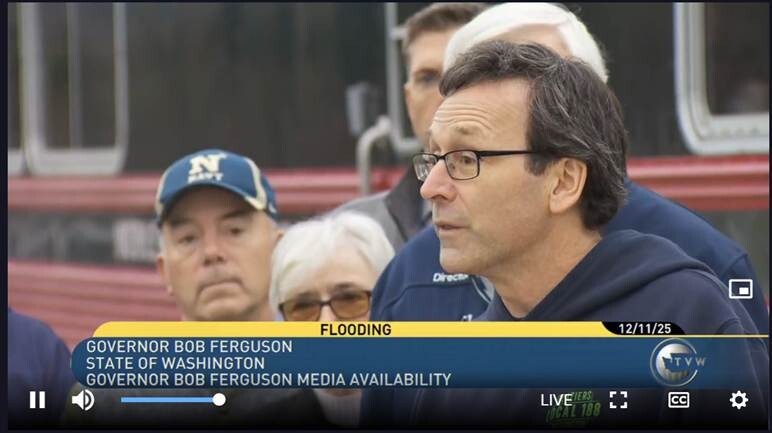
Today, at noon, he held a news conference to update everyone on the status of the response. Watch the press conference.

According to the governor and emergency management officials, the situation is unpredictable. They do not know exactly what will happen when the second wave of water reaches the lower areas of the rivers. They expect rivers to crest around 10 p.m.

This is affecting areas on both sides of the mountains and up and down the entire state.

If you have been advised to evacuate, please do so. Do not drive through standing water. Stay off of the dikes – they could fail and cause serious injury. What we will see happen this evening will test the work done after the work done in 2021 on our levies. Do not assume that because you made it through previous floods okay that you won’t experience dangerous conditions now.

The next 12 hours will be critical and will place a lot of demands on our emergency services. You can help by following guidelines and staying away from evacuated areas and flood waters.

I am concerned for all who are impacted and urge everyone to continue to take necessary precautions. As always, I hear stories of our local emergency personnel, government officials, and community members who have stepped up to care for their neighbors. I am grateful to serve a community that is defined a strong sense of care.


My latest column: Soft-on-crime legislators have blood on their hands, local prosecutor says

On the surface, a pair of murders in our state nearly two months ago don’t have anything in common except for each occurring in mid-October and resulting in the arrest of a young man.

One occurred in north Seattle, the other in Spokane — far from our corner of the state. Yet it’s a local prosecutor, Lewis County’s Jonathan Meyer, who sees two common denominators.

Not only are the suspected murderers both former residents of Green Hill School, the county’s state-run juvenile facility, but he ties the timing of the crimes to this year’s passage of House Bill 1815.

It’s among the latest additions to a very long list of soft-on-crime laws supported by Democrats.

READ THE FULL COMMENTARY