



Tag Archives: 20th LD

NEWSLETTER: Campground closures, the I-5 bridge over the Columbia and more

Dear Friends and Neighbors,

People all over Washington love spending time outdoors during the summer months, and those living in the 20th Legislative District are no different. We launch our boats, grab our fishing poles, and pitch tents at campgrounds around the state.

Unfortunately, our options for where to enjoy the outdoors are shrinking this year. Four state campgrounds are closing for the rest of the year. Seven others will suffer partial closures or reduced services.

In 2025, Democrats cut the budget for the recreation program administered by the Department of Natural Resources. This year, they cut another $580,000 from the maintenance budget for those campgrounds. Combined, the cuts come to nearly $8 million.

The four campgrounds facing closure:

  • Anderson Lake in Elbe
  • Rock Lakes in Conconully
  • Upper Clearwater in Forks
  • Island Camp in Glenwood (closed to overnight use, but the cabin and day use area will remain open)

Read the full list of closures and cuts

DNR also lost a partnership with the Washington Conservation Corps, which is a program for young adults that provided DNR with the equivalent of 70 staff members.

These cuts would have been unnecessary if the Democrat majority had managed the state budget more responsibly. Instead, they dug a multi-billion hole in the budget through chronic overspending and overreliance on volatile tax schemes.

If you have any questions or comments, email me or call my office at (360) 786-7638.

Sincerely,

John Braun


Delaying light rail offers best hope for new bridge

The following op-ed I cowrote with Sen. Jeff Wilson, R-Longview, appeared in the April 29 issue of The Center Square. 

Boston has its “Big Dig,” New York has its Second Avenue Subway, and the states of Washington and Oregon are getting set to play in the same league. Replacing the aging Interstate Bridge between Portland and Vancouver will be the biggest construction project our two states have ever undertaken. We’ve been working on this megaproject for 22 years, and we are closer to breaking ground than ever before.

Yet this latest effort is threatened by the same issue that killed the last big push 13 years ago. Decision-makers continue to see the new bridge as a means to get Portland light rail across the Columbia to Vancouver. They still haven’t figured out how we’ll pay for it.

Our message is simple. We need a safe bridge, and we need a bridge we can afford. We need a bridge that adds vehicle capacity and reduces traffic congestion. The oldest parts of the existing bridge date from 1917, it’s jammed with traffic morning and evening, and it’s at risk to fail in the next big earthquake. But we also need to get our priorities straight.

This is a bridge project, not a light rail project. And the only way this works is if we put light rail on hold until it makes sense for everyone – most importantly,  the people of Clark County who would be taxed for light rail operations, and who have voted against it three straight times.

What we are suggesting should be obvious to everyone who has been following the story. What surprises us is that more people aren’t saying it. Everything became clear a few weeks ago when Interstate Bridge Replacement managers finally released an updated cost estimate they had been delaying for months. Projected costs have doubled since 2022 to $14.4 billion, counting everything – new bridge, light rail and five miles of freeway improvements.

We don’t have that kind of money. So IBR managers and the governors of Washington and Oregon are proposing that we build the project in phases. We’ve lined up $5.7 billion from state and federal sources, The bridge alone will cost us $5.68 billion. Still pricey, but within the range of what we can achieve.

But the people driving this project don’t want to stop with that. They want light rail, too. “That train has already left the station,” declared Washington Gov. Bob Ferguson, blithely ignoring the fact that light rail construction will add $3.5 billion we don’t have, and that the voters of Clark County still have not agreed to tax themselves for their share of operations, about $4 million a year.

The questions will take years to resolve. Will we qualify for a billion-dollar federal transit grant? What about the rest of the money? What about the public vote? Will the people of Clark County be insulated from the financial liabilities of the Portland Metro? And will the trains go all the way into Vancouver or will they stop on a viaduct 90 feet above the waterfront with no connection to local transit?

Committing to a multi-billion-dollar expenditure for light rail when questions like these go unanswered risks starving every other highway and bridge project in our two states, or pushing our bond capacity to the limit, or forcing taxpayer bailouts the entire populace will have to bear.

The problem is that this was conceived from the start primarily as a light rail project, with the bridge as a secondary element – what you might call the “rail that wags the dog.” It started in 2004 when Portlanders looked for a way to cross the river and tap the Washington tax base for light rail. They realized they would have a tough job selling Clark County, where residents of outlying communities have little interest in supporting a light rail system they are unlikely to use. But what if they sweetened the deal with a multi-billion-dollar freeway bridge?

That got our attention. The bridge part made sense. Unfortunately, advocates of what was then called the Columbia River Crossing were unable to find a way to make light rail financially feasible. Senate Republicans tried negotiating, but the governor’s office told us to take it or leave it. We said no, the deal collapsed, and here we are 13 years later with a new proposal that looks like the old one. Just think. If not for light rail, we could have had a new bridge by now.

How can we break this logjam?

  • Let’s focus on things we know we can accomplish, like building a bridge. Light rail is a separate question. We can make the bridge “light rail ready,” but who says the trains need to roll from Day One?
  • Before we build light rail, the people of Clark County need to vote. Somehow decision-makers keep forgetting this. The people who will be taxed for light rail need to say yes, and their rights must be respected.
  • Let’s keep our promises. If we’re going to sell this project as a way to reduce congestion, let’s do more than just talk. The current plan adds no capacity. We’ll still have three traffic lanes each way. The bridge will be wide enough for an additional lane in each direction. Let’s build it that way from the start.

The engineering involved in this project is easy compared to the political challenges. Until the people of Clark County say yes to light rail, let’s not force it on them. A project this big, this complex and this costly should never be railroaded.


Better oversight of DCYF needed to protect Washington’s kids

In the latest episode of my Elephant in the Dome podcast, I discuss the urgent need for oversight at the Department of Children, Youth, and Families (DCYF).

The unanticipated impact of the “Keeping Families Together Act” has been severe. In some cases, children who should have been removed from their parents’ or relatives’ care are suffering critical injuries and even death.

While other states are handling similar agency failures through bipartisan investigation, Republicans were unsuccessful in getting the Democrat majority here in Washington to pass legislation to address this.

However, we succeeded in defeating legislation that would have made the situation worse.

One member of the House of Representatives sponsored a bill this year that would have removed the oversight duties of the DCYF Oversight Board. Thankfully, this bill did not pass. It would have been a terrible mistake.

Washington is facing $500 million in annual tort claims, largely driven by DCYF. Not only is this a staggering financial cost. It also represents the heartbreaking human toll this policy is having on vulnerable children in state care.

Republicans and Democrats in Washington must partner to hold DCYF accountable and to change the law to better protect children in state care.
NEWSLETTER: No surprise – governor backs down from demand for $1.6 billion in tax relief

Dear Friends and Neighbors,

Earlier today, Gov. Bob Ferguson announced that he supports the changes the House of Representatives has proposed to the income tax and will sign the bill if the House passes it.

Senate Bill 6346 proposes an unconstitutional income tax — the kind of income tax Washingtonians have rejected repeatedly. It levies a 9.9% income tax on everyone, with a temporary deduction for those earning less than $1 million.

All it will take to expand the tax to everyone is for majority Democrats to amend it during a future legislative session. The bill also contains a clause that prevents the people from overturning the tax through referendum.

The House’s changes add some tax relief, but they also add what we refer to as a “poison pill,” repealing all of that tax relief if the the people repeal the income tax at any point (e.g. – through initiative).

This development is deeply disappointing. The governor previously demanded that $1.6 billion of the income tax revenue be returned to taxpayers. As amended, the bill provides less than half of that amount. 

It’s discouraging that the governor has once again backed down from his claim to protect taxpayers. By ignoring that the bill is unconstitutional and prevents voters from overturning it through referendum, the governor and the majority are disrespecting the people. By not acknowledging how the income tax will affect our economy, Democrats look indifferent to reality.

When elected leaders start looking for ways around the will of the people, that’s a serious problem. It’s no surprise that people do not trust government.

Tell the governor that his decision is wrong for Washington and demand that he veto SB 6346.


Call upon the governor to VETO the income tax. 


If you have any questions or comments, email me or call my office at (360) 786-7638.

Sincerely,

John Braun


Cuts to the “Running Start” college program


Watch my weekly video update


A bill passed in the Senate this week (Senate Bill 6260)  would cut $14 million from the program that allows high school students to earn an two-year college degree at the same time they earn their high school diploma.

It’s called “Running Start,” and in 2024, the Legislature passed a Republican bill that expanded the popular program so that 10th graders could participate.

Students in the program get free community college tuition, but must pay for fees, books and supplies.

Those who complete the program get a leg up toward earning a four-year degree, allowing them to finish college earlier with less student debt than if they waited until after high school to begin their post-secondary education.

Chris Reykdal, the superintendent of public instruction, criticized the cuts to the dual-credit program, saying that they “starve students” of future opportunities. His office estimates the cuts will affect 7,000 kids annually.

Running Start is an important pathway to an advanced degree, making college possible for many who can’t afford four years of tuition. Because they can apply to a university as transfer students, the likelihood that these students will be accepted to a good school increases.

Unfortunately, this same bill cuts $32 million from the transition to kindergarten program.

This is a bad bill and it’s disheartening that when Democrats are forced to cut spending, they look toward education. It’s all about priorities.


LISTEN: My meeting with the governor

WATCH

LISTEN

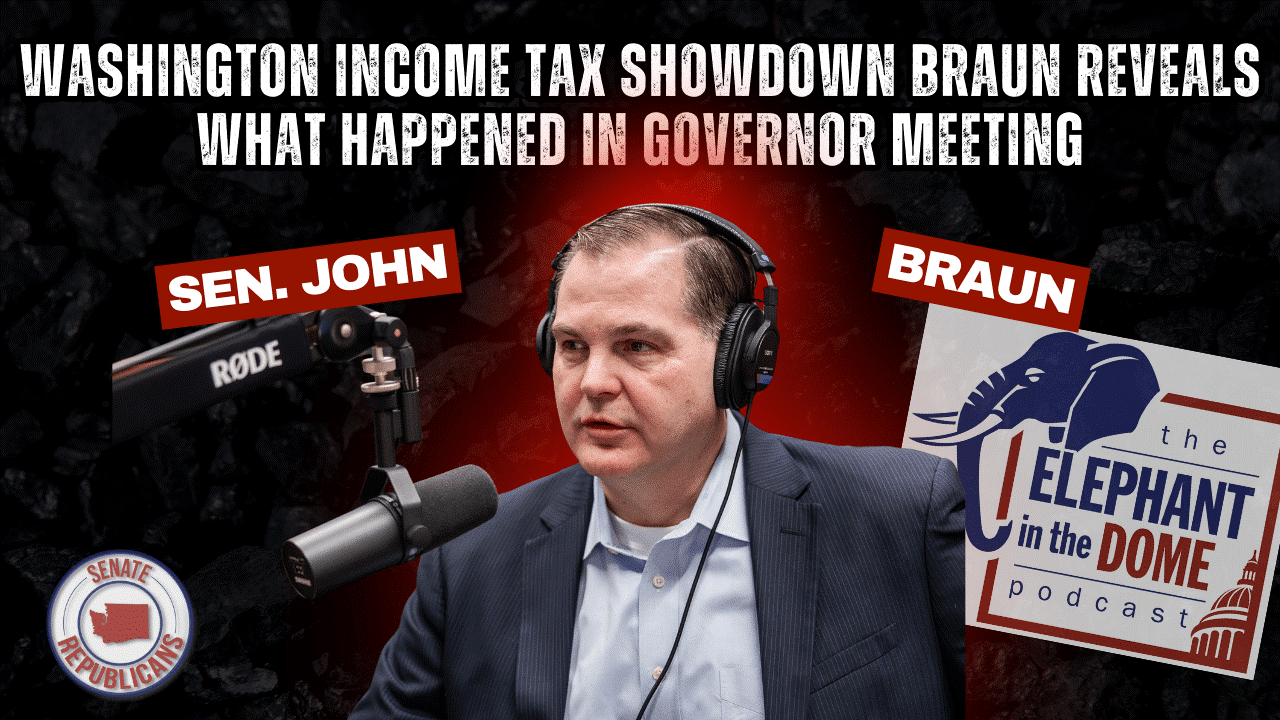
In this episode of Elephant in the Dome, I share what was discussed in the meeting, where negotiations stand, and why Republicans believe the proposal could affect families, businesses, and Washington’s economy.

The conversation also covers concerns about the state operating budget, potential future deficits, and legislation aimed at protecting children from fentanyl exposure.

In this episode:

∙ What happened during the meeting with the governor

∙ The latest developments in the income tax debate

∙ Concerns about the proposed state budget

∙ How tax policy could impact businesses and economic growth

∙ Efforts to address fentanyl exposure among children

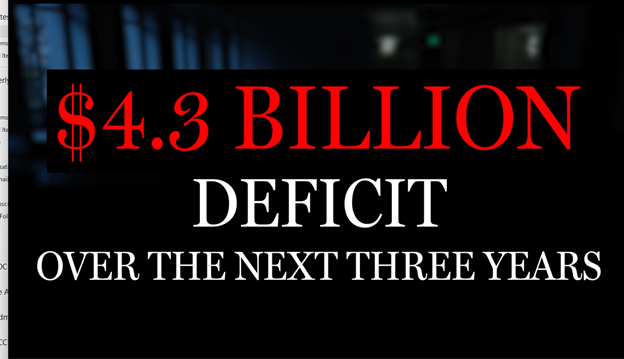
NEWSLETTER: A new year and still billions of dollars in the red

Watch my weekly legislative update to learn more about what’s happening
this early in the 2026 Legislative Session.


Elected sheriffs shouldn’t become partisan pawns

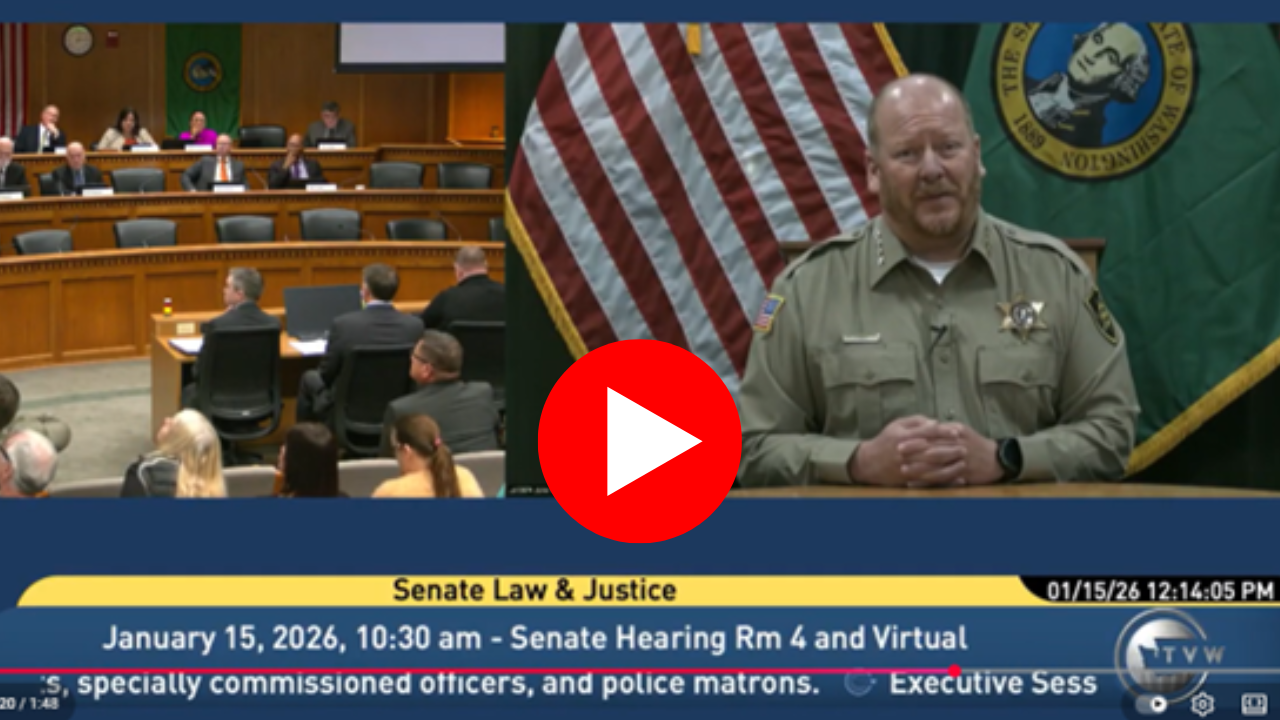
WATCH the testimony by the Sheriff of Spokane County against SB 5974.

Dear Friends and Neighbors,


When voters elect a sheriff to lead the law-enforcement officers who protect their county, an unelected board that answers to the governor should not have the power to decertify that sheriff. Allowing a non-elected entity to remove an elected official undermines the will of the people—and democracy itself. It also turns sheriffs into pawns of partisan politics and the agenda of the majority party in Olympia.

This may seem like an obvious principle. Yet Democrats in Olympia are backing Senate Bill 5974, claiming it will “strengthen and modernize” the laws governing sheriffs and other law-enforcement officers. In reality, the bill would erode local control and concentrate the power over criminal justice in Olympia—to the detriment of all 39 counties across Washington.

Sheriffs are elected under processes defined by our state Constitution. They swear an oath to uphold not only that constitution, but—above all—the U.S. Constitution. They also swear to uphold the laws of our state, subject to the constraints of the constitutions.

The Democratic majority has already passed the so-called Keep Washington Working Act, which contains unconstitutional mandates aligned with their political agenda. SB 5974 represents the next step: empowering the state to remove sheriffs who recognize that their constitutional obligations count more than those dictates.

The bill received a hearing in the Senate Law and Justice Committee on January 15. Many sheriffs testified in opposition, raising serious concerns that we share—particularly about the negative effect on rural communities.

There are broader implications as well. The Spokane County Sheriff noted that SB 5974 would make sheriffs the only elected officials in Washington who could be removed or decertified by a non-elected board. Ask yourself: Why would Democrats care about a county sheriff differently than a county auditor, or a city mayor? Many in the law-enforcement community have described the bill as a targeted political attack.

More than 13,000 people signed in to oppose the bill at the committee level—an extraordinary level of engagement, especially on just the fourth day of the legislative session. Thank you to everyone who took part.

If you oppose this legislation, now is the time to act – before the committee can vote. Contact the chair and members of the Senate Law and& Justice Committee and demand they reject Senate Bill 5974.

Elected sheriffs should remain accountable to their voters—not to an unelected board with no connection to the communities they serve.

Sincerely,

John Braun


My commentary in The Centralia Chronicle

An income tax on anyone in our state would
become an income tax on everyone.

Do the Democrats who run Olympia think Washingtonians are fools? It sure seems that way as we learn more about their plan to create a state income tax.

As I write this, we still don’t know the details, because no income-tax bill has been filed. But Democrat leaders clearly want to approve a state income tax this year – and now we see how they’ll try to sell it.

From Governor Ferguson on down, income-tax supporters claim it would apply only to people whose annual taxable income exceeds $1 million. That’s right in line with their divisive, make-the-wealthy-pay-more ideology. It also acts as the “bait.”

The trouble is, everyone knows a state income tax has been a Democrat dream for many decades. Common sense tells us the ultimate goal is to have every Washington resident pay it. A high-ranking member of the House Democrat majority even agrees. That’s the “switch.”

READ THE FULL COMMENTARY


This week on “Elephant in the Dome,” I discuss the governor’s State of the State address, income tax proposals, public safety challenges, transportation funding issues, the importance of transparency, and why debates should focus on ideas — not individuals.

WATCH

LISTEN