








Let’s cut to the chase: Is Washington getting an income tax? If Democrats and the governor get their way, the answer is yes.
Governor Bob Ferguson announced this week that he supports a state income tax, so long as it only applies to people earning more than $1 million a year. Make no mistake—this would be the first step toward a broader income tax that would eventually affect most, if not all, Washingtonians.
The governor also acknowledged that even if Democrats pass an income tax this year, the state wouldn’t see any revenue until 2029. Why the delay?
BACKGROUND
Washington’s Constitution prohibits a graduated income tax— one that charges different rates based on income. Any graduated income tax passed by the Legislature would almost certainly be challenged in court. In fact, Senate Democratic leadership has openly said that’s the plan.
The goal is to have the Washington State Supreme Court reclassify income so the Constitution no longer applies. We’ve seen this strategy before.
In 2023, Democrats passed an income tax on capital gains. Even though the IRS and every other state consider capital gains to be income, Washington courts rebranded it as an “excise tax” to let it stand. That ruling is now the legal foundation Democrats are relying on to justify pushing an income tax even further.
In the meantime, the state budget would not rely on the new tax revenue until—presumably—the courts approve it.
To be clear: I oppose any attempt to impose an unconstitutional income tax in Washington. Republicans in both the House and Senate will fight this because Washingtonians have been crystal clear—they do not want a state income tax. Period.
Voters have rejected income taxes more than ten times. As recently as 2024, they passed Initiative 2111, which permanently bans personal income taxes at the state and local level.
Ironically, for years Democratic governors—including Jay Inslee and Bob Ferguson—touted Washington’s lack of an income tax as a key reason businesses should locate here. A few years ago, the Department of Commerce quietly removed that selling point from its website. That should have been a warning sign.
INCOME TAX INSTEAD OF A SALES TAX?
Some people assume Washington would become like Oregon, which has an income tax but no sales tax. That is not what Democrats are proposing.
Nowhere have they promised to eliminate the sales tax. Under their plan, Washington would have both a sales tax and an income tax. In fact, the admission that the income tax would see no revenue for several years is a guarantee that the sales tax will continue, as is.
A SPENDING PROBLEM
Days before the governor’s announcement, he released his supplemental budget and vowed to veto sales or property tax increases. Notably absent from his list? An income tax.
Why won’t Democrats get the message? Washington doesn’t have a revenue problem—it has a spending problem. Even mainstream media is beginning to realize this.
The state operating budget is $77 billion, having ballooned dramatically over the past decade. Yet despite record spending, have we reduced homelessness? Fixed our housing shortage? Recovered from learning loss in our schools? Addressed the mental health and substance abuse crisis?
The answer is no.
Washington can’t afford to continue down the Democrats’ tax-and-spend path. Their ideology-driven budgeting has created a multibillion-dollar shortfall. The solution isn’t digging deeper into your pockets—it’s reprioritizing how your tax dollars are spent.
WHAT CAN YOU DO?
You can speak out against this income tax—and any others—by contacting the bill sponsors, budget committee chairs, legislative leaders, and the governor’s office. Tell them to stop pushing unconstitutional taxes and start living within our means.
When these bills receive hearings, you can sign in to oppose them and even testify—either in person or remotely.
Learn how to testify in committee.
Your voice matters.
I will keep you updated as this fight continues.
Sincerely, Senator John Braun

Washington does not have the most regressive tax structure in the nation
Democrats — and much of the press — routinely say Washington has the “most regressive” or “upside-down” tax system in the country. That claim comes almost entirely from one partisan advocacy study that’s been repeated so often it’s treated as fact.
WHAT THE NEUTRAL ANALYSIS FOUND
A new economics paper by professors from Princeton, the University of Minnesota, and economists at the Federal Reserve, published by the National Bureau of Economic Research (NBER), reached a very different conclusion.
Instead of ranking Washington as worst-in-the-nation, the NBER study found that Washington’s overall tax-and-spending system is essentially middle-of-the-pack — about 23rd nationally.
That’s a dramatic difference.
WHY ARE THE RESULTS SO DIFFERENT?
There are two big reasons the NBER findings don’t match the oft-cited partisan study:
- The partisan study mostly just ranks income-tax rates
The study Democrats cite heavily weights whether a state has a high top income-tax rate. In fact, the NBER authors point out that the partisan ranking closely tracks which states have the highest income-tax rates, not which states are actually most “unfair” overall.
Washington doesn’t have an income tax — so that study effectively penalizes us from the start.
By contrast, the NBER research:
- Looks at all income levels, not just the very top
- Measures what people actually pay, across the full income range
- Finds Washington’s effective tax rates for most working and middle-class residents are very close to the national average
In other words: when you look at the whole income ladder, Washington doesn’t stand out as extreme.
- The NBER study includes benefits — not just taxes
This is the most important difference.
The partisan study looks only at taxes paid. The NBER study looks at taxes paid and benefits received.
This means it accounts for:
- Public assistance
- Social services
- State spending that directly benefits lower- and middle-income households
When you include those benefits, Washington turns out to be one of the more generous states in the country — and those benefits significantly offset any tax regressivity.
Very few states provide more in transfers and services than Washington.
THE BOTTOM LINE
When you look at the full picture — taxes and benefits — Washington:
- Is not the most regressive state
- Is not an extreme outlier
- Lands squarely in the middle nationally
The claim that Washington has the “worst” tax system depends on ignoring half the equation.
ONE MORE FINDING THAT RAISES EYEBROWS
The NBER paper also found something Democrats rarely mention:
- People at all income levels tend to move away from states with more progressive tax systems
- This effect is strongest among high earners
- States that rely heavily on income taxes tend to have higher overall tax burdens
- States with sales and property taxes tend to have lower average tax rates
IN SHORT
Highly progressive tax systems may sound good in theory — but in practice, they often drive people (and jobs) elsewhere. A single tax alone might not motivate people to move, but every new tax may be the last straw that does.
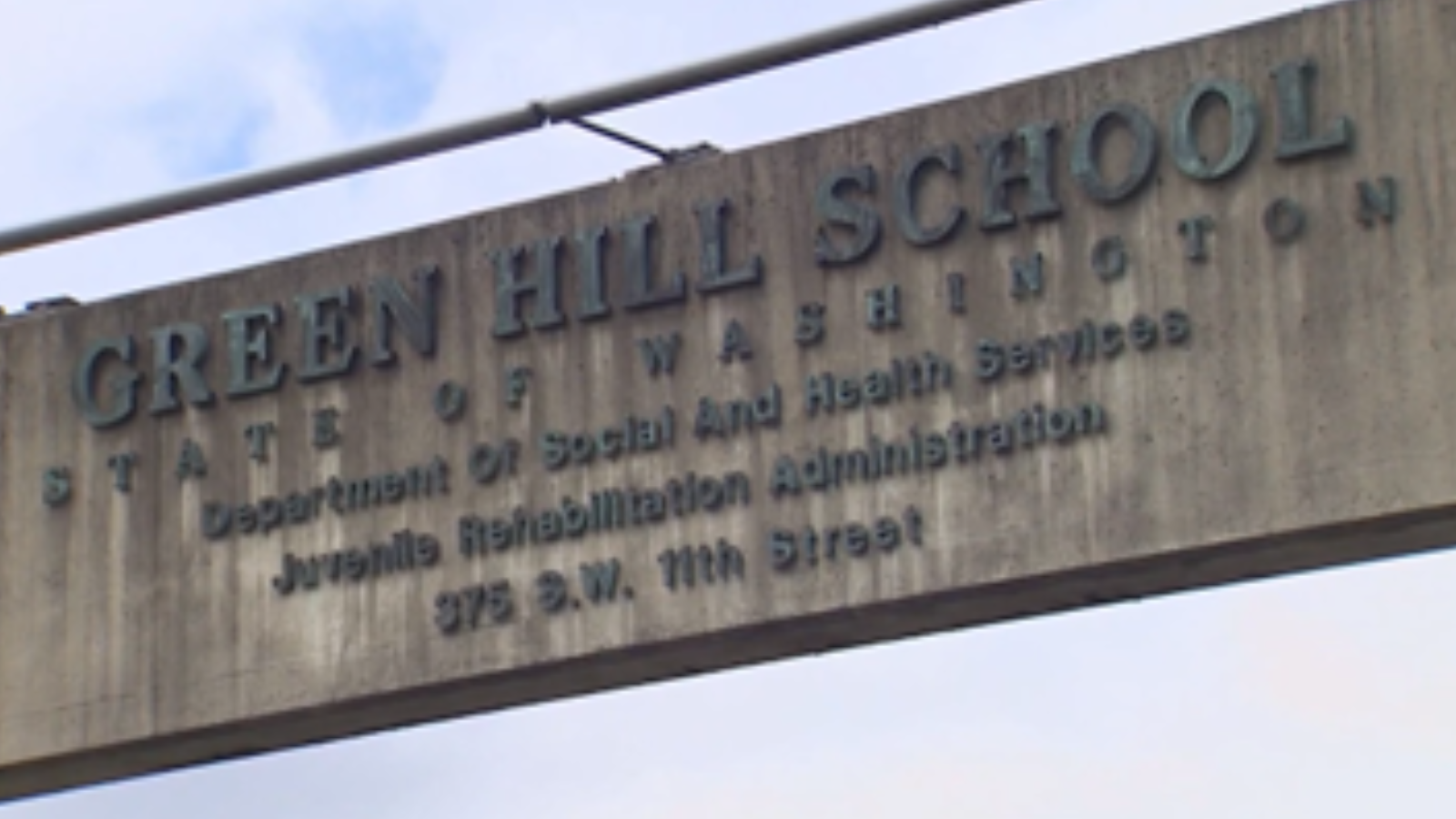
UPDATE: The Green Hill School
Gov. Ferguson’s 2026 budget proposal includes nearly $12 million for Washington’s two most significant juvenile rehabilitation facilities — the Green Hill School and Echo Glen.
Both have been plagued by dangerous overcrowding resulting from a policy known as “JR to 25,” which allows those convicted of felonies before the age of 18 to remain at the facilities with youth offenders until age 25, when they are transferred to adult prisons.
For years, I’ve called for thorough investigations into violence among the residents, assaults against staff, poor security, and illegal activity among staff. Last year, my bill to allow the transfer of some of the adults before the age of 25 to the custody of the Department of Corrections passed the Senate but was killed in the House. If it had passed, it would have helped to alleviate the overcrowding soon after taking effect.
I also sponsored a bill last year that a bill that would require staff at these facilities to wear body cameras as a means to improve transparency, accountability and safety for everyone. Unfortunately, the Democrats never gave it a hearing.
The governor would spend the $12 million on higher salaries for current staff and additional security. While I support a variety of efforts to fix this ongoing problem, any money spent should be part of a larger effort to drastically and immediately improve conditions.
Legislative Democrats should stop playing games with the lives of the residents and staff at our juvenile rehabilitation centers and pass my reforms in 2026.

NOW RECRUITING: Senate Pages for the 2026 Legislative Session
Do you know a young person (age 14 to 16) who would like to be sponsored by my office to page for the Legislature this year?
“The Washington State Legislature has one of the finest page programs in the country. Each year, hundreds of students from across Washington have the opportunity to take part in the legislative process and watch the Legislature and other branches of state government in action.
Pages are sponsored by legislators and serve for one week during the legislative session. Pages spend their week learning about the legislative process while distributing materials throughout the capitol campus, assisting offices, delivering messages, working on the chamber floor, and carrying the flags at the opening of each day’s legislative session. Pages also spend time each day in Page School learning about all aspects of state government.”
To speak with Senate Page Program staff about accommodations or how the Senate can help facilitate a positive paging experience, please contact:
Myra Hernandez
Civic Education Director
P.O. Box 40482
Olympia, WA 98504-0482
(360) 786-7498